
Jump to
- The surprising truth: most solar systems switch OFF in a blackout
- How solar battery backup actually works
- Whole-home vs essential-loads backup: which do you need?
- How long will a solar battery power your home during an outage?
- What you need for blackout protection in Melbourne
- Is blackout backup worth it for Melbourne homes?
When destructive storms tore through Victoria in February 2024, more than 530,000 homes and businesses lost power — and tens of thousands stayed in the dark for days. For many Melbourne households, that was the moment a solar battery stopped being about saving money and started being about staying safe and comfortable when the grid goes down.
But here's the part most people don't realise: having solar panels — or even a battery — doesn't automatically mean your home stays powered in a blackout. Whether your lights stay on comes down to how your system is set up.
This guide explains exactly how solar battery backup power works for Melbourne homes, what you need to keep running during an outage, and how long you can expect the power to last.
The surprising truth: most solar systems switch OFF in a blackout
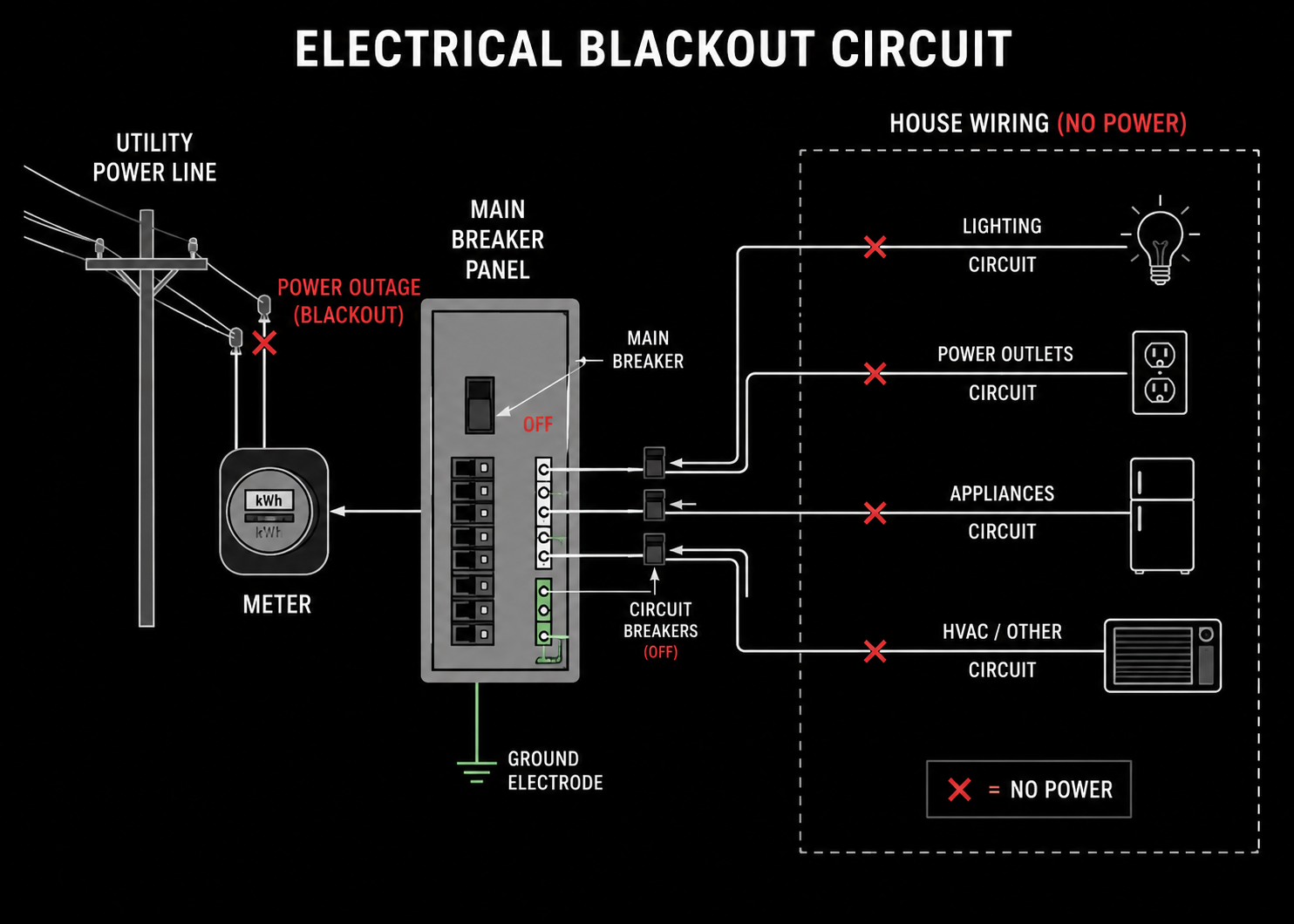
If you have a standard grid-connected solar system without special backup hardware, your panels actually shut down the moment the grid fails — even in bright sunshine.
This is a built-in safety feature called anti-islanding. Your inverter automatically stops feeding power when it detects an outage, so electricity can't flow back into the grid while network technicians may be working on the lines. It protects lives — but it also means a normal solar system gives you zero backup when you need it most.
The same is true for many batteries: unless a battery is specifically configured for backup, it will also sit idle during an outage. So if blackout protection matters to you, it has to be designed in from the start.
How solar battery backup actually works
To keep your home running during an outage, your system needs to be able to safely "island" — disconnect from the grid and run on its own. That requires a key piece of hardware: a backup gateway (sometimes called a backup box or automatic transfer switch).
Here's what happens during a blackout with a backup-ready system:
- The backup gateway detects the grid has gone down.
- It instantly disconnects your home from the grid (so you're safe and compliant).
- Your home becomes an electrical "island", powered by your battery.
- The switch usually happens in a fraction of a second — fast enough that many appliances never notice.
- During daylight, your solar panels keep generating and recharge the battery.
That last point is the game-changer. Because your panels can top the battery back up each day, a well-sized system can potentially keep essential power running indefinitely through an extended outage — as long as the weather cooperates. See our backup-ready battery systems.
Whole-home vs essential-loads backup: which do you need?
Not all backup is equal. There are two main approaches, and the right one depends on your battery size and budget.
Essential-loads (partial) backup A dedicated backup circuit powers just your most important appliances — typically lights, the fridge, WiFi/modem, phone chargers and a few power points. This is the most popular and cost-effective option because it makes your battery last much longer during an outage.
Whole-home backup Your entire home stays powered, including larger loads. It's the premium experience, but it needs a bigger battery (and often multiple batteries) plus a larger inverter — and running high-draw appliances like air conditioning, electric ovens or pool pumps will drain the battery faster.
| Essential-loads backup | Whole-home backup | |
|---|---|---|
| Powers | Fridge, lights, WiFi, chargers, key power points | Everything in the house |
| Battery needed | Smaller / single battery | Larger or multiple batteries |
| Backup duration | Longer (energy focused on essentials) | Shorter unless heavily sized |
| Cost | Lower | Higher |
| Best for | Most Melbourne homes | Large homes, medical needs, work-from-home |
For most households, a well-designed essential-loads setup hits the sweet spot — covering everything you actually need without paying for an oversized system. Not sure which is right for you? Ask our team.
How long will a solar battery power your home during an outage?
The honest answer: it depends on three things — your battery's usable capacity, how much power you're using, and how much sun your panels get.
As a rough guide for a typical Melbourne home running essential loads only (fridge, lights, internet, phones):
- A 10kWh battery can often run essentials for roughly a day or more on stored charge alone.
- Add daytime solar recharging, and that can stretch much further — effectively rolling over day to day in good weather.
- Run big loads (ducted heating/cooling, oven, kettle) and the battery will drain in hours, not days.
The key to long backup isn't always a bigger battery — it's being smart about what you back up. That's why system design matters more than headline capacity.
What you need for blackout protection in Melbourne
To make sure your system actually keeps the lights on, you need the right combination of equipment installed by an accredited team. A blackout-ready setup typically includes:
- A backup-capable battery (not every battery offers this — it must be specified)
- A backup gateway / automatic transfer switch to enable safe islanding
- A hybrid or backup-ready inverter to manage panels, battery and grid
- A dedicated backup (essential loads) circuit at the switchboard
- Correct sizing for the appliances you want to keep running
Because Victoria's grid is exposed to storm season, bushfire-related shutdowns and ageing infrastructure, designing for backup from day one is far easier (and cheaper) than retrofitting it later. Solar Victoria — backup power guidance.
Is blackout backup worth it for Melbourne homes?
If you've ever lost a fridge full of food, sat through a freezing night without heating, or been unable to work from home during an outage, you already know the answer.
With major storm events becoming more common and parts of Victoria's network ageing, backup power has become one of the top reasons Melbourne homeowners add a battery in 2026 — right alongside saving money on bills.
At Amos Green Energy, we design every battery system around how you live — recommending the right backup type, the right size, and the essential circuits worth protecting. We'll show you exactly what would stay on during a blackout before you commit. Get a free blackout-protection quote today.
FAQ
Do solar panels work during a blackout?
On their own, no. Standard grid-connected solar shuts down during an outage due to an automatic safety feature called anti-islanding. You need a battery with backup capability and a backup gateway to stay powered.
Do all solar batteries provide backup power?
No. Only batteries specifically configured for backup — paired with a backup gateway and (usually) a hybrid inverter — will run your home during an outage. Always confirm "blackout backup" is included when you get a quote.
How long will a solar battery last in a blackout?
Running essential loads, a 10kWh battery can often power a Melbourne home for around a day on stored charge, and longer when solar recharges it each day. Running large appliances will drain it in hours.
Can my solar recharge the battery during a power outage?
Yes. In a backup-ready system, your panels keep generating during daylight and recharge the battery, which can extend your backup power significantly during a multi-day outage.
Can I add blackout backup to my existing battery or solar system?
Sometimes. It depends on your inverter and battery model. Our team can assess your current setup and advise whether backup can be retrofitted or if an upgrade is needed.